Walk-In Shower Guide: Everything You Need to Know Before Designing Your
December 2, 2025Why Walk-In Showers Are Beneficial
Walk-in showers have various benefits that have supported and made them an effective option in modern bathroom renovation. Their barrier-free nature facilitates much in accessibility among children, the elderly, or anyone having low mobility. On the eye, they add grace and spa-like simplicity to the room, having less in the way of visual interruptions, and more natural light streaming into the rooms. Walk-in showers are much easier to clean and eliminate the point where dirt or limescale can be found due to the lack of doors and complicated mechanisms. They also aid in maximising the appearance of space, making smaller bathrooms look large and spacious.
Key Planning Considerations
To make a walk-in shower design comfortable and as well as lasting, to design a walk-in shower, one has to pay attention to some functional details.
Space Requirements
A comfortable walk-in shower normally requires a minimum of 120 × 80 cm of a showering area, but bigger sizes can provide a more luxurious experience and improved splash. Smaller bathrooms can also be fitted with walk-in designs through clever design solutions.
Drainage and Waterproofing
Drainage should be well-designed since walk-in showers are open. It has a slight floor gradient, which causes water to flow to the drain, avoiding the puddles or overflows. Waterproof decorative films are used under floors and walls that cover the structure of the bathroom and are needed in this construction to ensure durability, particularly in full wet-rooms.
Ventilation
Good ventilation (either by an extractor fan or a window) is required to control steam, limit condensation, and prevent mould. Proper air circulation protects the materials and makes the showering cavity comfortable.
Flooring Options
The flooring should provide slip protection and be suitable for wet conditions. The most popular include a porcelain floor, a textured microcement, natural stone, and artificial anti-slip. The floor ought to be safe to walk on, and it must also complement the design.
Wall Protection
Bathroom wall coverings should be resistant to water solutions. Old materials like tiles and stone panels have been in use, though the new materials like engineered shower boards or high-quality waterproof films are easy to install and maintain.
Glass Panel Choices and Layout Configurations
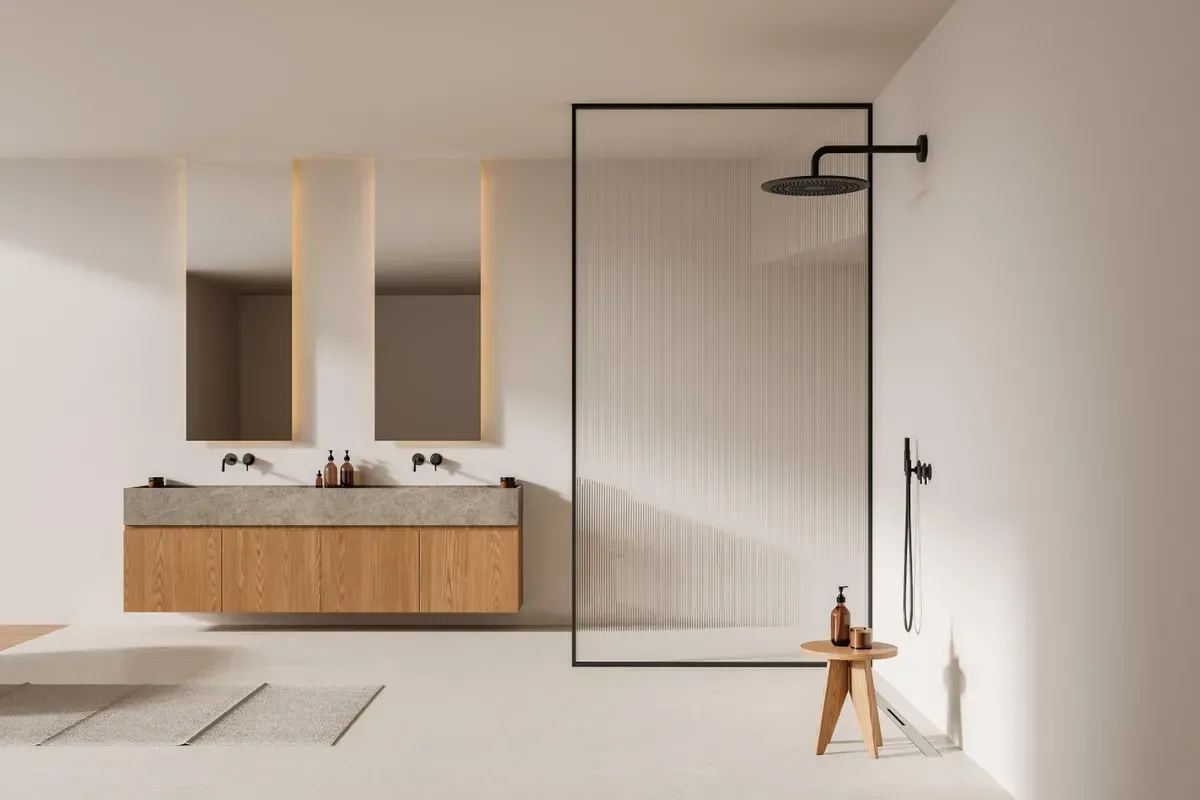
The walk-in shower is defined by a fixed glass panel that makes the room open. The choices would include frameless clear glass to any colored or framed panels to bring in an architectural tone. The shower layout planning can involve single straight panel usage, a return panel to enhance splash control, or even entirely enclosing the look with full-height partitions without losing accessibility.
Material Options
The type of material that can be used to complete walk-in showers is very diverse, based on the preferred look and maintenance requirements. The tiles can be patterned and would have a texture. Micro cement provides a smooth, modern surface, and the natural stone can give luxury. Waterproof decorative films make easy changes without the costly demolition, providing a facade of stone, concrete, wood, or tile.
Safety Features: Non-Slip Surfaces, Grab Bars, Floor Gradients
The major factor in any open shower design is safety. Slip resistance should be built into the floors, and this is done by the use of textured materials or anti-slip coating. A slight gradient will provide the drainage and prevent standing water. Grab bars or support rails are available and can be fitted without disrupting the design to make this bathroom more stable, particularly in multi-user or family, with a higher number of users.
Styling Ideas: Minimalist, Spa-Inspired, Contemporary, Natural Textures
Walk-in showers have amazing flexibility in design. Minimalist designs prefer straight lines, transparent glass, and monochrome colours, whereas the layouts suggested by spas use warm stone finishes and subtle lighting. Modern-day bathrooms either have glass with black frames, geometric tiling, or vivid contrasts. Natural surfaces like wood effects or sandstone would give a homely, organic feeling. Due to the simplicity of the structure, the choice of style is a true masterpiece. For quick aesthetic updates, walk-in shower ideas often include accent walls, large-format prints, or applying waterproof decorative films for a fresh look without full re-tiling.
How Interior Film Supports Bathroom Upgrades
Cover Styl’ adhesive coverings are revolutionizing bathroom renovations with their exceptional moisture resistance and easy installation. No more heavy construction work, dust, or endless delays! Our films can be applied directly to your existing tiles, panels, or painted walls, instantly transforming your shower’s aesthetics without removal or re-tiling.
With Cover Styl’, access an infinite palette of premium finishes: natural stone effect, polished concrete, veined marble, or authentic wood, all at a fraction of the cost of traditional materials. Our waterproof films are specially designed for wet areas and guarantee exceptional durability, even in the most demanding environments.
Whether you’re a homeowner looking for a quick renovation or a professional seeking a high-performance solution for your projects, Cover Styl’ offers the quality, speed of execution, and aesthetic results you deserve.
Discover our complete range of stone and concrete effect coverings and bring your project to life today!