Vinyl Wrap and 3D Printing: Can You Cover 3D Printed Surfaces?
December 2, 2025Can You Apply Vinyl Wrap to 3D Printed Surfaces?
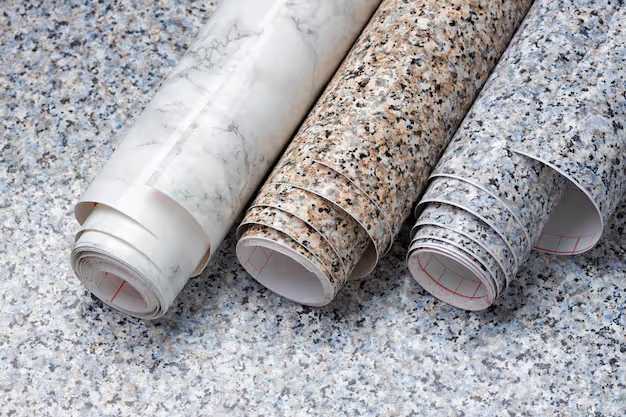
So, can you vinyl wrap 3D prints and expect them to last? In most cases, yes. Vinyl is an adhesive film for 3D printed surfaces, similar to the architectural films used on walls and furniture. If the part is solid, clean, and smooth, the glue can grab and hold.
Texture is the main problem. FDM prints leave layer lines and tiny gaps. These ridges trap air and reduce the area where the adhesive can touch. The rougher the print, the higher the chance of bubbles or peeling edges. A smoother surface gives far better adhesion.
Always test a small zone first with a small offcut of film.
What Types of 3D Printing Materials Work Best?
Different filaments behave differently when wrapping 3D printed objects.
PLA
PLA is the most common filament for hobby printers. It sands easily and takes filler primer well. Once smoothed and sealed, it usually accepts vinyl well. Keep heat gun passes short, because PLA softens at lower temperatures than other plastics.
ABS
ABS is tougher and handles heat better. It suits parts that sit near windows, lights, or warm electronics. You still need to sand and sometimes prime, but you can use a bit more heat without warping the print.
PETG
PETG is strong and slightly flexible. Light sanding cuts back strings and ridges and gives the glue something to bite into.
Resin prints and other materials can work too. The same rule stands. The smoother and more uniform the surface, the better vinyl wrap 3D printed surfaces will perform.
Preparing 3D Printed Surfaces for Vinyl Wrapping
Good prep matters more than any tool.
Sanding steps
Begin with a medium grit, such as 220, to flatten the worst lines. Move to 400 or 600 grit to refine the finish. Focus on edges and corners, because these are the first places where film tends to lift.
Priming options
After sanding, many makers use a filler primer or thin surface sealer. This fills small pores and gives you a uniform base so the glue can spread. Let the coating cure fully before you wrap, or you trap solvents under the film.
Cleaning and dust removal
Right before wrapping, clean the part with a lint-free cloth. Remove dust, sanding residue, and skin oils. A mild cleaner that leaves no film works best. Let the object dry completely before you touch the vinyl.
How to Apply Vinyl Wrap to 3D Prints
Once your print is smooth, wrapping 3D printed objects feels close to wrapping a small panel.
Use a felt squeegee or soft cloth. Start from the center and push air toward the edges. Peel the liner a little at a time so you do not fight a large loose sheet.
On curves, use low, even heat. Warm the film until it feels flexible, then stretch it gently over the shape. Keep the heat gun moving so you do not soften the plastic below.
For deep curves and sharp corners, work in small sections. It is often easier to use two or three pieces of film with overlaps on hidden edges than to force one piece to do everything. Tiny relief cuts can prevent folds and wrinkles.
For a business-focused guide to applying vinyl wrap on complex surfaces, Cover Styl’s expert application article explains tools, heating, and stretching techniques in detail.
Benefits and Limitations
When the prep and application are right, vinyl wrap can make a simple print look finished. You gain solid color or pattern, extra surface protection, and the option to change the look later without reprinting. For long-lasting, professional-looking results on display pieces and interior parts, Cover Styl’s durable decorative wrap solutions offer reliable adhesion and a wide choice of finishes.
When vinyl wrap 3D printed surfaces works best
Vinyl works best on flat faces, gentle curves, and simple shapes. Logos, panels, props, covers, and display models are all good candidates.
The method has limits. Heavy texture, tiny raised details, and very sharp internal corners are hard to wrap cleanly. In those cases, paint, clear coat, or bare plastic may give a better result than film alone.
Conclusion
So yes, you can use vinyl wrap 3D printed surfaces and get a smooth, professional look. The winning combo is simple prep, careful heat, and patience.
Start with one easy object as a test piece. Try different 3D printing surface finishing techniques and watch how each step changes the final wrap.
Ready to elevate your 3D prints? Take a look at Cover Styl’s advanced vinyl collections, made to grip smoothly on detailed and tricky surfaces. Give your creations a clean, polished finish that looks built for real-world use.