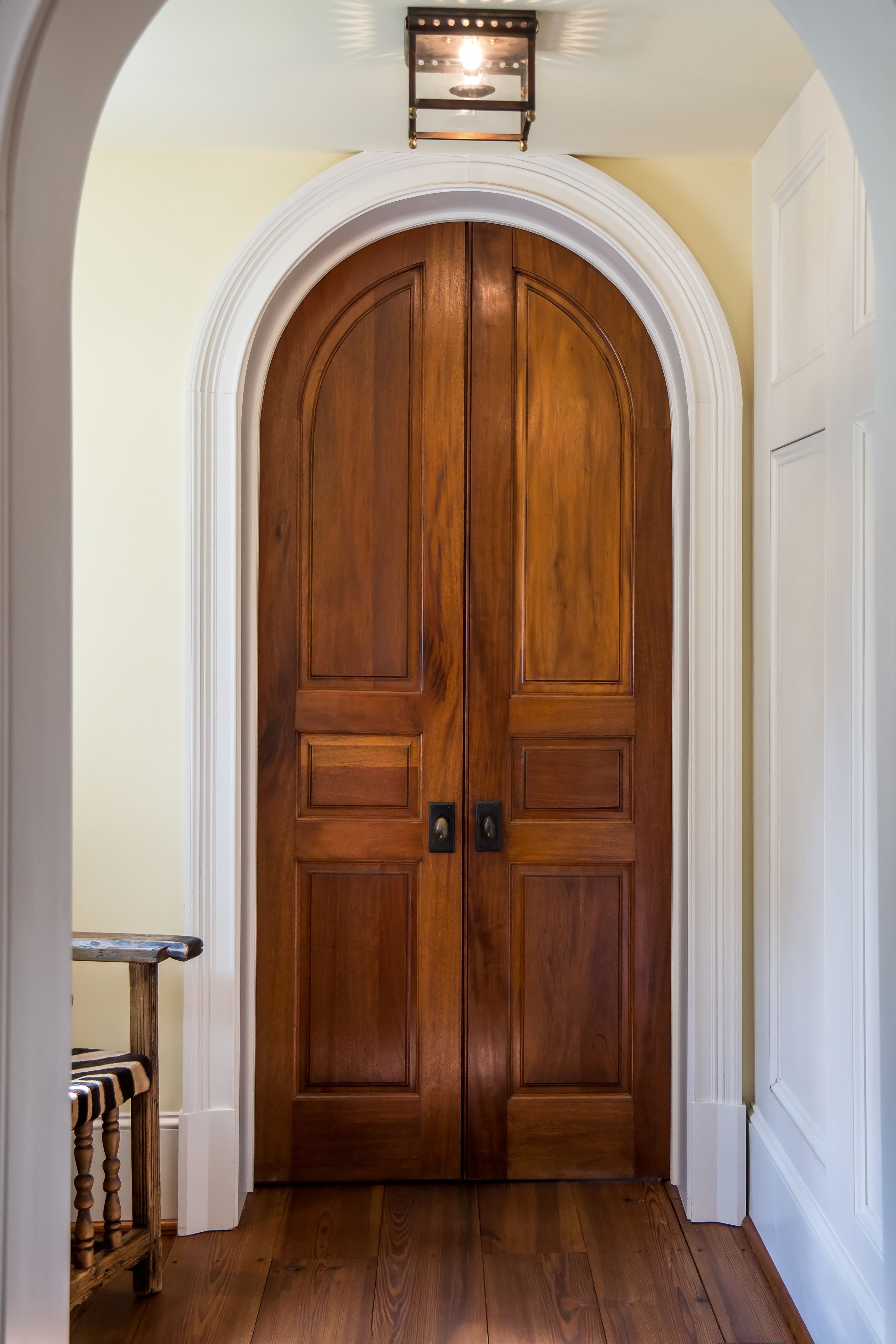
How to Create an Ogee Arch Effect on a Door
December 10, 2025What the Ogee Arch Effect Represents in Interior Design
The ogee arch carries a recognisable S-shaped curve that dips inward and rises again toward the top centre, which gives it a gentle, continuous movement.
The form appears in traditional joinery, vintage interiors, and architectural elements that lean toward classic detailing. In modern settings, it serves more as an accent, softening rigid lines and drawing attention without overwhelming the rest of the design. When it appears on a door, the curve breaks the monotony of a flat surface and introduces a sense of depth even before any physical profile is added.
Why the Ogee Shape Works Well Across Styles
The curve sits comfortably in rooms that lean toward elegance, but it also adapts to quieter, contemporary spaces where the door needs character without turning into a dramatic focal point.
The profile creates a balanced frame around the central panel, and the eye naturally follows the movement of the curve, which is why it often appears in restored doors, hospitality spaces, and modern apartments that use subtle heritage references.
Methods for Creating an Ogee Arch Effect on a Standard Door
Most people who start planning a decorative door transformation look for solutions that do not require replacing the entire door, just their look, and the good news is that several approaches can work well here, depending on budget, tools, and the type of finish the room can support.
1. Using Adhesive Decorative Film
A decorative adhesive film can give the illusion of an ogee panel without changing the physical surface. It can work especially well when the door already has a clean, smooth finish.
So, this process usually includes lightly cleaning the door, marking the curve with a template or guide, and applying a contrasting or wood-effect film cut to the desired shape.
If the surrounding interior already uses wood tones or textured finishes, adhesive film can offer control over grain direction, tone, and detail. It also makes it easy to match the door with adjacent furniture or wall panels, especially when the chosen style benefits from a unified palette.
In projects where durability is important, the high-resistance range from Cover Styl provides surfaces that handle everyday use without losing definition. A relevant option for this article is the collection available here: wood-effect adhesive films for door renovation
2. Adding Decorative Moldings
Decorative profiles are a direct way to create a three-dimensional ogee door panel. Most ready-made moldings can be cut, curved, or joined to form the characteristic S-shaped arch.
After all the pieces are aligned, they are usually fixed with an adhesive suitable for indoor joinery and then primed and painted to match or contrast with the existing door colour.
This technique works particularly well when the space benefits from real shadows and relief. It gives the door a more substantial look and allows the arch to stand out even under softer lighting. Rooms with muted palettes or classic references often use this approach because it adds depth without needing a complete carpentry overhaul.
3. Creating a Painted Trompe-l’Oeil
For interiors where the budget or the existing door material makes it challenging to attach moldings, a painted illusion can achieve the same sense of structure. This method relies on carefully drawn lines, a template for the curve, and two tones of paint that differ just enough to make the shape visible.
One colour acts as the panel, and the other outlines the curve to mimic the look of a recessed or raised surface.
This approach is going to work best in rooms such as minimalist rooms, especially where the door blends into the wall. A subtle curve painted directly onto the door can also shift its presence without introducing new materials or textures.
Ensuring Harmony With Existing Interiors
A classic profile like an ogee arch can feel out of place if the surrounding elements pull in a completely different direction. In spaces where the door meets contemporary furniture, soft textures, or minimal lines, the arch should stay refined rather than exaggerated. In warmer, traditional rooms, the curve can be more pronounced because it has company in the rest of the interior detailing.
Lighting also influences the final impression. A three-dimensional molding will catch shadows throughout the day, while a film or a painted illusion depends more on colour contrast and placement. In hospitality or retail environments where lighting changes often, the quieter approach tends to hold shape more consistently.
Practical Applications Across Rooms
Bedroom doors tend to benefit from softer curves that feel calm rather than decorative. Living rooms with strong architectural lines often use the ogee shape to introduce a point of interest without overwhelming the space.
In interiors such as hospitality, the effect can help define room entries or corridor transitions, especially where repetition creates rhythm.
So, when designers or DIY lovers want the look without committing to structural changes, adhesive films are becoming a convenient option. These types of materials will allow you to adjust the arch’s scale and direction, and these films can be replaced later if the style of the room evolves or you want another quick change in the looks.
For anyone who wants additional ideas related to surface updates, this article we’ve recently published on our blog will offer you much more context: explore more interior renovation tips
Conclusion
As already mentioned, creating an ogee arch effect on a door works best when the curve feels naturally connected to the room.
Even if your final choice involves film, moldings, or paint, we must agree that the goal is to shape a door that supports the atmosphere of the interior rather than standing apart from it. The technique remains flexible across renovation projects, from subtle DIY updates to more detailed professional transformations.
If this guide helped clarify the options, consider browsing other articles on our Cover Styl blog and case studies for more direction on finishes, techniques, and interior surface transformations.