

Why Two Identical Installations Don't Age the Same Way
June 8, 2026Environment, Primary Responsible for Your Installations’ Aging
The technical performance of a material is never fixed. It intrinsically depends on the environment in which it evolves. Each space has its microclimate and specific constraints. Taking these variables into account from the design stage ensures that appearance and functionality will durably resist external hazards.
Climatic variations generate distinct mechanical stresses. A south-facing glazed room undergoes intense thermal rise and UV exposure. On a flexible wall coating or laminated panels, these factors cause expansion-shrinkage cycles and potential discoloration.
Conversely, a blind corridor experiences neither thermal shocks nor UV, avoiding strip opening and significantly reducing the risk of thermal-origin blistering.
Physical Contacts and Mechanical Impacts: Why Does Traffic Intensity Change Everything?
Durability depends on the ability to resist the level of stress. In a hotel, the reception hall undergoes intense traffic and repeated friction, unlike moderately frequented rooms.
Material selection must anticipate these constraints. A high washability and scratch-resistant coating becomes essential for high-traffic tertiary corridors, ensuring optimal resistance to repeated friction and impacts.
Installation Defects, Drying Time and Bonding Primers: The Culprits of Premature Aging
The main source of premature aging hides beneath the visible surface. The fundamental implementation stages determine durability. Simple micro-differences, like a leveling defect, compromise longevity and lead to exorbitant repair costs.
Foundation preparation requires absolute rigor. The moisture content of a plastered wall must be strictly controlled before installing a waterproof coating. If a team neglects plaster drying or application of the appropriate bonding primer, the surface will suffer unsightly peeling or blistering.
Structural Risks Related to Non-Compliance with Installation Tolerances
Compliance with flatness tolerances prevents junction failure. Omitting expansion joints on large partitions or walls exposed to thermal variations constitutes a major error leading to inevitable cracks.
Essential Match Between Material Choice and Spatial Constraints
Choosing the right material requires rigorous analysis confronting technical characteristics with lifecycle aggressions. It involves anticipating risks: water splashes, chemical agents, scratches or extreme thermal variations. This evaluation measures material resilience.
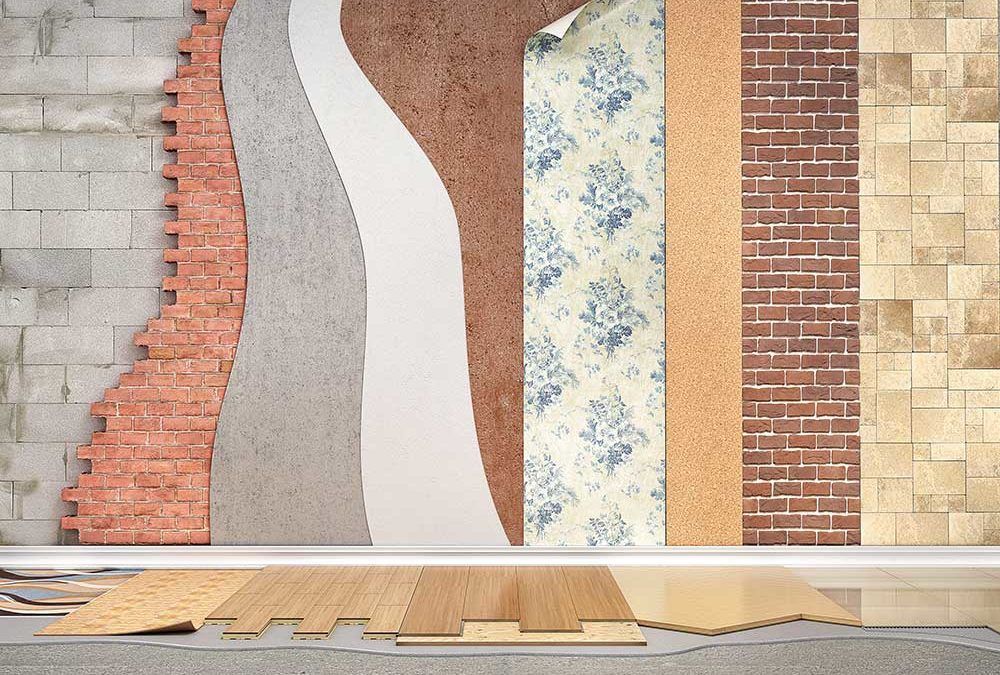
Textured wall coverings offer acoustic insulation and micro-movement absorption, but are vulnerable to impact tears. Rigid coverings (ceramic, HPL panels, wood) resist friction and humidity, but require a perfectly flat and inert substrate.
Evaluation is not limited to mechanical strength. In public buildings, fire classification is eliminatory. Indoor air quality requires control of Volatile Organic Compounds (VOCs) via labels like A+. Using PVC-free coatings also contributes to improving the indoor environment.
Anticipate Each Risk with a Precise Evaluation Grid
Adopting a comprehensive prescription logic links user needs to the technical characteristics of the complete system (wear layer, adhesives, underlayers, substrate). By anticipating interactions via a decision grid, professionals eliminate incompatibility risks.
A structured grid proceeds by usage scenarios.
- For a very humid area with high traffic, combining ceramic and waterproof epoxy joints proves superior to cement joints.
- For quick renovation on an occupied site, favoring dry solutions (clip-on panels, stretched fabrics) or decorative adhesive solutions, optimizes deadlines compared to traditional wall plasters requiring several days of drying.
How Does Daily Operation Reveal Good and Bad Choices?
Daily operation reveals real durability. Maintenance methods, their frequency and typology will exacerbate or attenuate degradation. Divergent maintenance routines create a technical gap between identical installations.
A high-performance coating degrades when faced with inappropriate chemistry. Overly acidic or alkaline detergents attack polyurethane layers or alter waterproof treatments of natural stones. Two laminated panels will present divergent appearances if one is cleaned with neutral pH microfibers while the other undergoes abrasive sponges and detergents.
Purchase, Maintenance, Renovation: Think “Investment” Rather Than “Expense”
Financial analysis must integrate the total cost encompassing the entire lifecycle: purchase, implementation, maintenance, repairability. An initial economical choice can become a bottomless pit in use. Premature wear imposes frequent renovation, leading to considerable operating losses in tertiary, hospital or hotel sectors.
Identical Installations Don’t Age the Same Way
The aging divergence between two installations results from the accumulation of factors related to environmental context, preparation rigor, technical choice relevance and maintenance protocols. Ensuring durability requires a comprehensive systemic approach, the only guarantee of performance maintained over decades.
To concretely illustrate these principles and discover examples of high-performing installations in different environments, case studies detailing Cover Styl’s best practices.