

What Happens Beneath a Surface Film Over Time?
June 6, 2026The Three Layers Behind Every Surface Film Installation
A surface covering system is composed of three key elements:
- Decorative vinyl film
- Pressure-sensitive adhesive (PSA)
- Substrate (wood, MDF, laminate, metal, plasterboard, etc.)
Each layer plays a role in the stability of the installation. While the decorative surface remains visible, most long-term performance factors occur at the adhesive–substrate interface, which is hidden beneath the film.
Even when a surface appears intact, environmental conditions and substrate behavior can influence how the system performs over time.
How Adhesion Develops After Installation
Architectural films use pressure-sensitive acrylic adhesives. Unlike structural adhesives, these do not cure chemically after installation.
Instead, adhesion develops through a process known as wet-out, where the adhesive gradually flows into microscopic pores of the substrate surface.
During the first hours and days after installation:
- Bond strength increases
- The adhesive conforms more closely to the surface
- Trapped air escapes through microchannels (when present)
Optimal adhesion is achieved when:
- The substrate is clean and stable
- Surface energy is adequate
- Installation pressure is correctly applied
Proper surface preparation is therefore one of the most important factors in long-term performance.
The Role of the Substrate in Long-Term Stability
While the film itself is dimensionally stable, the substrate underneath can influence performance.
Materials such as MDF, plywood, or wood-based panels naturally react to environmental conditions. Variations in humidity and temperature may cause small dimensional changes over time.
If the substrate moves excessively, it may create localized stress at the adhesive interface.
This is why professional installation typically includes:
- Substrate inspection
- Moisture control
- Sealing of porous surfaces
- Use of primer on edges or difficult materials
Proper preparation significantly reduces the risk of edge lifting or localized tension.
Environmental Factors That Influence Durability
The long-term performance of architectural films depends largely on environmental conditions.
Temperature
Normal indoor temperatures are well within the operating range of most architectural films. However, extreme heat near cooking equipment, radiators, or direct sunlight may accelerate material aging.
Humidity
High humidity environments such as kitchens, bathrooms, and spas require careful substrate preparation. Moisture can affect wood-based materials and should be controlled before installation.
Many interior films offer excellent resistance to water when properly installed, making them suitable for a wide range of renovation projects.
UV Exposure
Prolonged UV exposure may gradually affect surface appearance and material flexibility. For this reason, certain products are specifically engineered for exterior use and offer extended warranties.
Mechanical Stress and Daily Use
Surface films installed in interior environments are designed to withstand daily use, including cleaning and moderate mechanical contact.
Over time, surfaces exposed to heavy traffic may experience:
- Abrasion from cleaning tools
- Repeated contact at edges or corners
- Impact from objects or equipment
These factors generally affect the decorative layer first, rather than the adhesive bond.
Using appropriate cleaning products and avoiding abrasive materials helps preserve the surface appearance.
Typical Signs of Installation Stress
Even when a surface remains visually attractive, small indicators may reveal localized stress within the system.
Common signs include:
- Slight lifting at exposed edges
- Small bubbles appearing in the same area
- Tension marks near joints or corners
- Surface irregularities caused by substrate movement
These situations are usually related to substrate preparation or environmental exposure, rather than the film material itself.
Early inspection allows corrective action before the issue spreads.
Installation Quality: The Most Important Factor
The durability of architectural film installations depends heavily on installation quality.
Professional installers focus on several key aspects:
- Thorough substrate cleaning
- Correct use of primer where required
- Precise edge finishing
- Controlled installation temperature
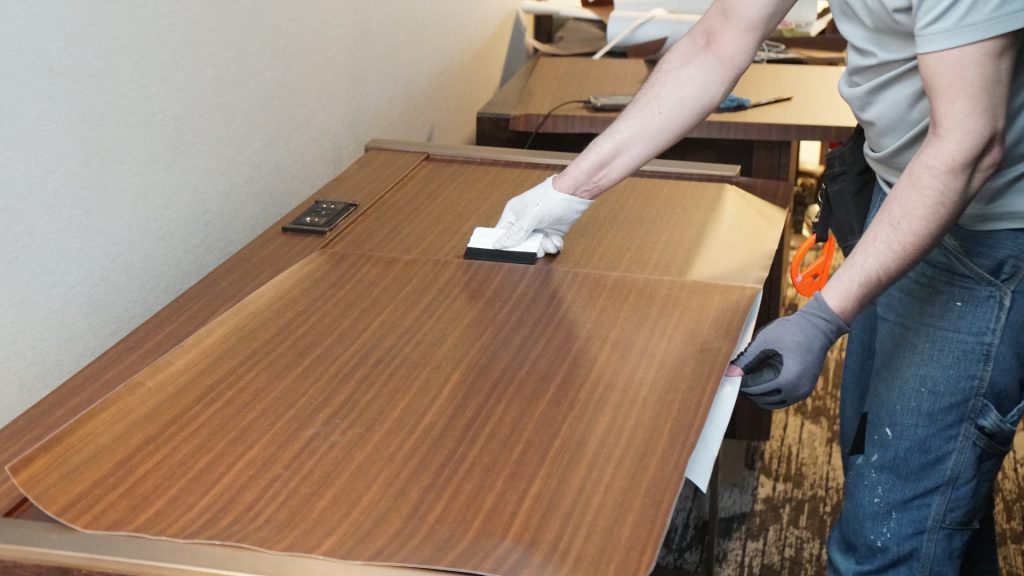
- Adequate pressure during application
Mastering these steps requires both knowledge and practice. For a detailed overview of vinyl wrap application techniques and professional tips, refer to our dedicated guide.
When these conditions are respected, surface films can maintain both their appearance and adhesion for many years.
Maintenance and Care
Proper maintenance contributes significantly to long-term performance.
Recommended practices include:
- Cleaning with non-abrasive products
- Avoiding aggressive solvents
- Controlling excessive humidity
- Inspecting edges periodically
These simple steps help maintain the visual quality of the surface and reduce long-term stress on the system.
Long-Term Performance in Renovation Projects
Architectural films are widely used in residential, hospitality, retail, and commercial environments because they offer an efficient alternative to traditional renovation.
When properly specified and installed, surface films can provide:
- Durable decorative finishes
- Resistance to everyday wear
- Long service life in interior applications
The key to success lies in understanding that the installation is not just a decorative layer, but a complete system involving film, adhesive, and substrate.
Final Thoughts
Surface films are engineered to deliver reliable performance over time. While environmental conditions and substrate behavior can influence durability, most long-term issues can be prevented through correct installation and preparation.
By focusing on substrate stability, proper installation techniques, and appropriate maintenance, renovation films can maintain both their aesthetic value and functional performance for many years.