

Why Is Installation Context Much More Important Than the “Green” Label?
To design high-performing spaces, it is essential to understand the difference between “sustainable” as a marketing term and true long-term sustainability. The durability of a fit-out strictly depends on the match between a product and its installation environment.
Traffic, Humidity, UV: Will “Eco” Materials Really Survive?
Renovation durability factors first rely on the nature of uses (residential, hospitality, retail or tertiary). A wall coating intended for hospital corridors requires impact, scratch and washability resistance properties incomparable to those of a dwelling. The gap between marketing durability and real durability is revealed when project constraints, such as constant humidity, intense traffic or prolonged UV exposure, are underestimated in favor of the sole argument of bio-based or recycled material.
The surface solutions market offers a multitude of innovations. However, without critical analysis, many products end up becoming disposable renovation materials.
Structural Vulnerability of Composite Coatings to Intensive Uses
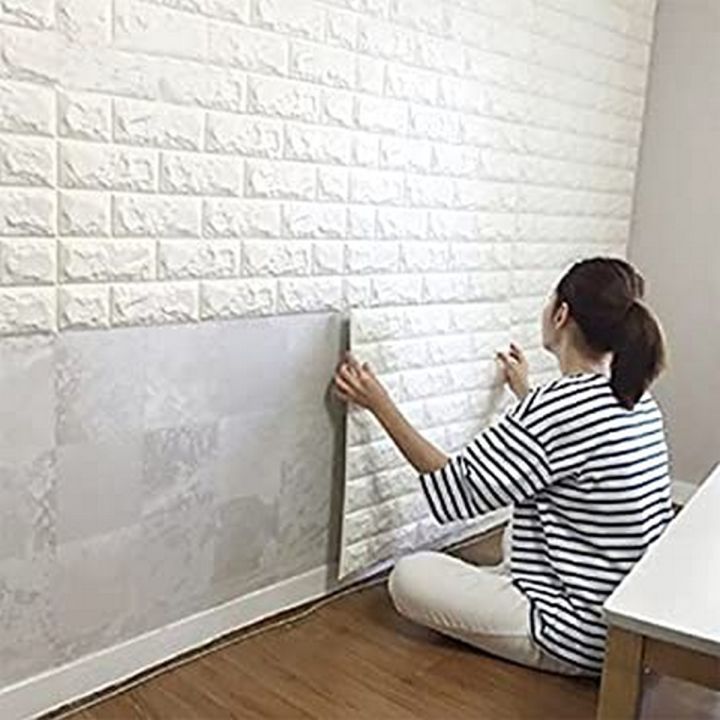
Among materials that seem durable but fail over time are certain fragile ecological wallpapers or honeycomb wall panels incorporating recycled fibers. With a thin superficial protective film and limited structural density against continuous friction, these wall coverings scratch, tear or tarnish quickly in high-traffic corridors.
In comparison, high-pressure laminate (HPL), while requiring more energy in manufacturing, offers total inertia and durability exceeding 30 years. This contrast perfectly illustrates what makes a renovation truly sustainable: the intrinsic resilience of the material.
Similarly, using chipboard panels with low-emission adhesives for countertops or bathroom basins poses a waterproofing problem. A slight water infiltration is enough to swell the substrate, rendering the furniture unusable and causing premature replacement.
Technical Performance to Compare: How to Evaluate a Material Beyond Its Ecological Veneer?
Prioritizing lifecycle analysis over short-term ecological claims requires examining standardized technical data rather than advertising brochures.
Selection criteria must integrate precise metrics. Washability tests (EN 13300 standard) or abrasion resistance (Taber standard) quantify a wall coating’s ability to resist aging. A high use class guarantees optimal resistance to intensive traffic. Moreover, color fastness to UV (evaluated on the blue wool scale) is a non-negotiable longevity criterion in public or highly glazed spaces.
Key questions to ask before choosing materials include VOC (Volatile Organic Compounds) emissions. The A+ label is an indoor health indicator. Nevertheless, an A+ labeled paint lacking washability will require refurbishment after two years, thus multiplying its environmental impact. Furthermore, fire reaction and resistance to industrial cleaning chemical agents are decisive parameters to avoid premature aesthetic obsolescence.
How to Ensure Long-term Renovation Sustainability?
Construction system selection must rely on rigorous technical trade-offs to ensure long-term renovation sustainability.
If a space is subject to intensive washing with large amounts of water and aggressive products (e.g., professional kitchens or train station restrooms), then a continuous mineral system or ceramic with epoxy joints should be favored. Any organic material or wood fiber composite without waterproofing in such an environment constitutes a short-term technical failure risk.
Conversely, if the space is a dry office area requiring acoustic absorption, honeycomb wall panels or stretched textiles become relevant and truly sustainable.
The Critical Importance of Preparation
Common implementation errors ruin the performance of the best materials. Poor substrate preparation or installation on wall plaster with unstabilized residual moisture (capillary rise or hidden leaks) will inevitably lead to blistering and coating peeling. Expansion joint management is equally essential to avoid structural cracking.
Maintenance, Lifecycle and Overall Environmental Cost
The hidden environmental cost of premature replacement is fully revealed during building operation and maintenance phases.
A coating is environmentally performant only if it can be maintained without heavy chemicals or destructive interventions. Wall panels fixed on framework or thermoformable architectural films allow spot renovation (a damaged strip or element) and facilitate reconditioning. Conversely, fiberglass wallcovering sealed in full requires tearing off the substrate during refurbishment, generating significant waste.
Profitability and Ecology: Return on Investment of Sustainable Design
The true lifecycle approach integrates the total system lifespan, required renovation frequency and operating losses incurred by businesses (in the case of the tertiary and commercial sector) during closures for work. An initially more expensive but technically impeccable material always proves more economical and ecological over a 20-year period.
Fewer “Green” Labels, More Technical Rigor
True responsibility in interior design and construction does not lie in the superficial adoption of eco-labels, but in the rigorous engineering of longevity. A renovation demonstrates its environmental value only when material technical characteristics accurately meet the physical, chemical and mechanical constraints of their daily use.
To observe the concrete application of these technical criteria in varied contexts, Cover Styl case studies document measurable implementations and field feedback. Avoiding premature replacement, favoring repairability and demanding certified performance constitute the only vectors capable of guaranteeing truly resilient built environments.