

Green Materials vs Irreversible Fit-outs, Anticipating End-of-Life from the Start
The traditional eco-design approach often focuses on product origin (certified wood, recycled coatings or bio-based paints). However, exotic wood cladding or wall tiles fixed with epoxy mortar-adhesive becomes ultimate waste at end-of-life, as separating components is impossible without damaging the original partition.
Conversely, understanding the lifecycle of sustainable renovation requires evaluating what the surface will become in a decade. Lifecycle thinking matters more than material origin alone.
In sectors like hospitality or retail, interior renewal cycles typically range from 5 to 10 years. Using irreversible installation methods generates considerable environmental cost: heavy waste generation, energy-intensive demolition and premature replacement of damaged substrates. Thinking about a fit-out in a reversible way prevents this technical and architectural obsolescence, transforming used products into resource reserves rather than rubble.
Designing Without Destroying: Reversible Interior Design
Reversible interior design relies on dry construction and system separation. The objective is to dissociate the finish coating from its structural substrate.
Wall Covering: The Advantage of Vinyl Wraps and Removable Panels
Wall coverings perfectly illustrate this circular strategy. Thermoformable architectural vinyl wraps, stretched fabrics or clip-on decorative panels are designed to cover surfaces without altering the original structure.
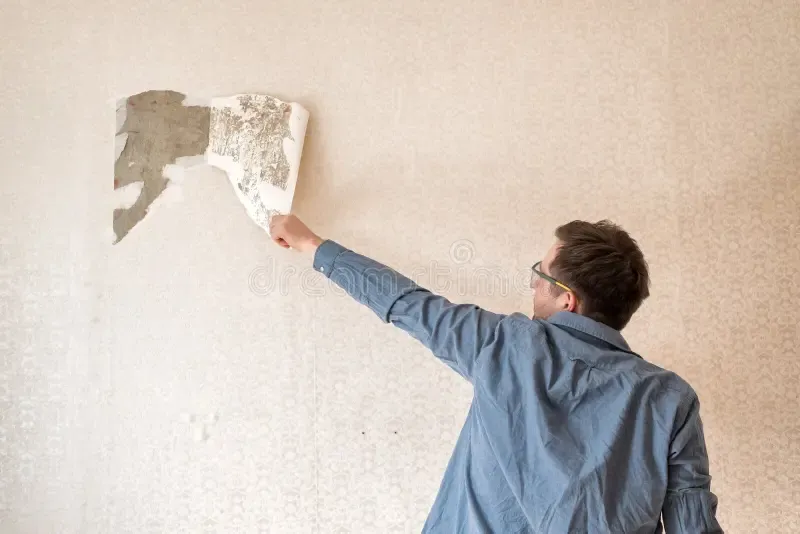
Stone cladding or traditional tiles require chisel destruction, generating dust, rubble and plasterboard substrate deterioration. Conversely, a textured vinyl wrap, applied directly to an existing wall, is removed thermally or mechanically, leaving the wall intact and allowing quick renewal without demolition.
Walls, Wet Rooms and Fit-outs
On vertical surfaces, reversibility is achieved through mechanical frameworks. Decorative wall panels or PVC-free compact laminate coatings fixed on battens replace glued tiles. Even in wet environments (waterproof), using modular partitions with compressible sealing joints isolates the surface from water without resorting to irreversible mortar-adhesives.
Mechanical Resistance, Ensuring Reversibility in Sustainable Renovation
The technical viability of a reversible surface relies on maintaining its performance against daily stresses (traffic, water, stains, impacts).
The absence of rigid bonding transfers mechanical constraints to the coating structure itself. For walls, resistance to impacts, friction and abrasion is determined by the surface finish. A typical order of magnitude for architectural films in high-traffic spaces is around 200 to 250 microns total thickness. Fire classification (Euroclass) and washability tests validate these technical performances to ensure the material won’t degrade under repeated traffic or chemical cleaning.
Selection Method: Trade-offs Between Aesthetics, Constraints and Implementation
Designers, architects and B2B decision-makers evaluating material choices must integrate site constraints from the design phase to achieve successful removable installation.
Successful Installation, from Technical Choice to Substrate Preparation
Orientation toward a construction system relies on the level of stress and expected modification frequency:
- If the project concerns an open-space office subject to frequent service reorganizations, then using movable partitions covered with customizable vinyl wraps proves the most relevant solution for immediate maintenance and visual updating.
- If the site is in a retail space requiring minimal downtime, then applying vinyl wall coverings directly to old panels constitutes the preferred solution, avoiding drying times, olfactory nuisances and dust.
However, whatever system is chosen, successful reversible installation requires rigorous wall preparation. The surface condition must be homogeneous (absence of major roughness or flaking paint). The most common error is neglecting wall porosity or chemical compatibility of bonding primers, causing flexible coatings or architectural films to peel. Anticipating corners, cutouts around switches and material tension ensures the system’s aesthetic integrity without altering the existing structure.
Maintenance, Lifecycle and Long-term Renovation Sustainability
Long-term renovation sustainability is evaluated through total cost, including installation, operation and end-of-life.
Reversible solutions modify the maintenance approach. In case of concentrated wear, deep scratches or indelible chemical stains, the traditional approach requires covering the entire room. With modular or adhesive wall covering, repair is performed by targeted replacement of the damaged panel or discreet application of a patch.
At the end of its usage cycle, a removable system reduces stripping costs. Dismantled elements integrate specific take-back programs established by manufacturers, reintegrating material into a real circular economy logic.
Designing Today to Reuse Tomorrow
Ultimately, the sustainability of a renovation no longer comes down to the eco-label of its materials, but to how we anticipate their end-of-life. A renovation is truly sustainable only if it’s reversible. Because needs change and spaces (shops, offices, hotels) renew quickly, anticipating disassembly is the only way to preserve resources.
Reversibility protects building integrity, facilitates maintenance and ensures that today’s products can be reused or recycled tomorrow, without generating ultimate waste. To discover other concrete approaches to responsible renovation, consult Cover Styl’s blog articles dedicated to sustainable and reversible solutions.