


Renovating a Temporary Room: Smart Solutions for Guest & Shared Spaces
June 6, 2026Why Renovating a Temporary Room Requires a Different Strategy
Unlike renovation for most of the rooms in the house, a temporary bedroom renovation or shared living space upgrade should avoid heavy structural work and irreversible changes. Temporary rooms often are flexible and can be used as a guest room, a home office, or a nursery depending on what the owners need at the time. So they usually: - Serve multiple users
- Have uncertain occupancy duration - Require quicker turnaround and tighter budgets Instead of investing in permanent modifications, the focus should be on surface transformation, modular design, and reversible interventions.
Define the Room’s Likely Future Use
Before selecting finishes or furniture, clarify possible future scenarios: - How is this room most likely to be used in the future?
- Might a shared living space be converted into a private bedroom?
- Will the property be rented or sold later?
This affects choices like: - Neutral vs. personalized color palettes - Built-in storage vs. freestanding units - Fixed partitions vs. movable dividers
Planning for future possible change reduces the need for future demolition or waste.
Budget Control: Avoid Heavy and Irreversible Work
A common mistake in cost-effective room renovation is investing in permanent upgrades that are unnecessary for short- or mid-term use. Avoid: - Removing or relocating structural walls - Installing fixed, custom cabinetry - Replacing flooring unless essential - Complex electrical reconfigurations
Instead, focus on improvements that: - Upgrade surfaces rather than replace them - Improve lighting through fixtures rather than rewiring - Enhance comfort with textiles and modular furniture Surface refinishing is often more efficient than full feel replacement. Solutions like architectural surface coverings for interior renovation allow you to refresh walls, doors, wardrobes, and furniture without demolition. —----------
Flexible Interior Design Solutions
1. Choose a Neutral Base
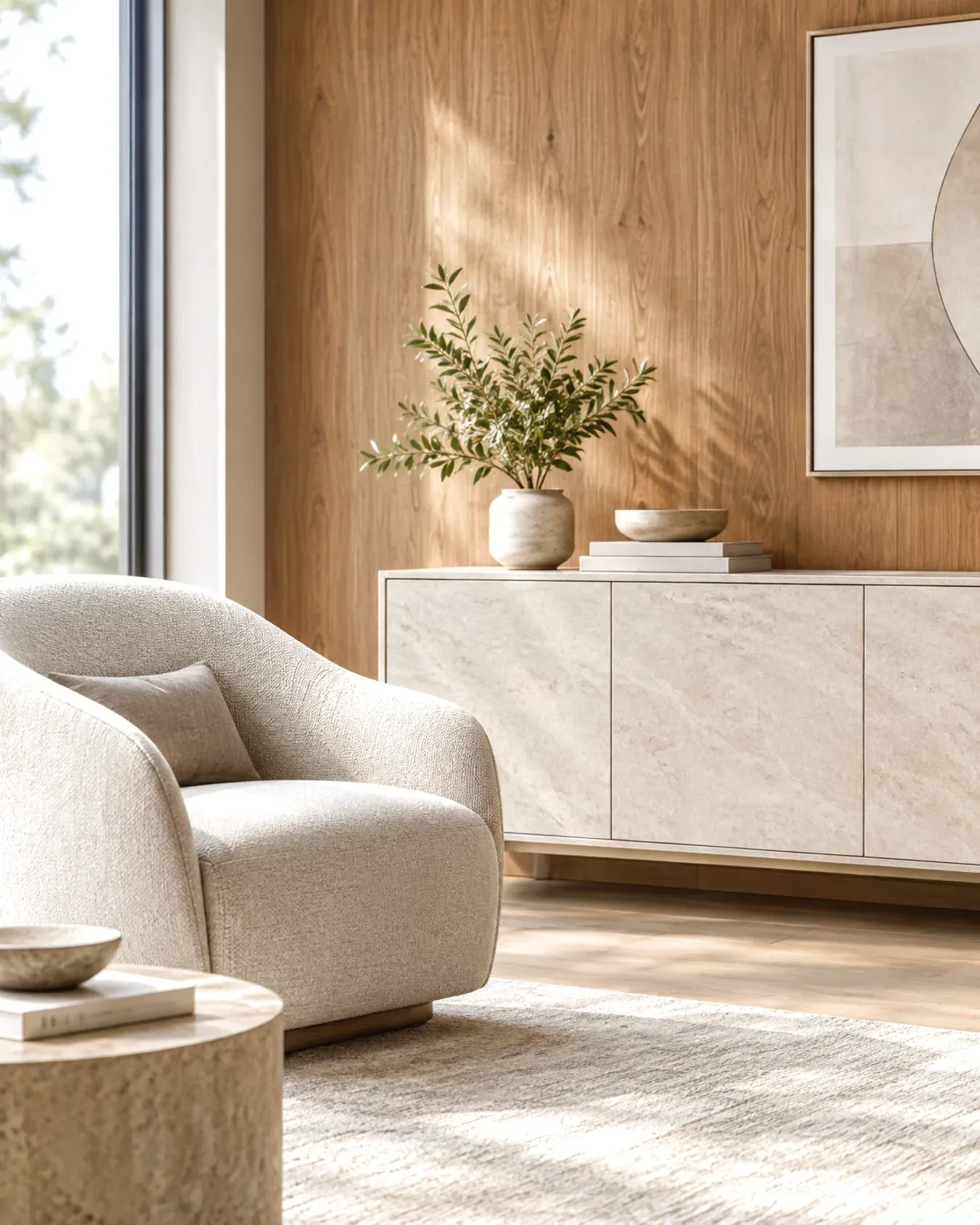
A neutral foundation ensures longevity and adaptability. Recommended approach: - Soft whites, greys, warm beige tones
- Natural wood finishes - Minimal visual clutter
Neutral surfaces make it easier to re-style the room later with accessories rather than renovation work.
The Silk Prestige Colection offers neutral tones combined with premium quality, enhancing the overall space.
2. Reversible Renovation Materials
Reversible solutions are key when renovating a temporary room. They minimize waste and preserve the option to return the space to its original state. Examples include: - Decorative surface films
- Removable wall finishes - Floating shelves instead of fixed cabinetry - Non-permanent room dividers High-performance decorative finishes allow you to refresh surfaces without full replacement. A broad colour selection makes it easy to transform neutral office cabinetry into a warm, child-friendly space.
Surface Solutions That Allow Quick Transformation
One of the most effective strategies in a guest room makeover is upgrading visible surfaces. Focus areas: - Wardrobe doors - Headboards - Interior doors - Built-in shelving - Accent walls Instead of replacing these elements, refinishing them with modern textures (wood, stone, textile effects) provides a contemporary look with lower cost and reduced disruption. Benefits of surface-based renovation: - Faster installation - Reduced construction waste - Lower labor costs - Minimal downtime
Even simple furniture can gain a new look using these methods. This ikea table gets a fresh new look in no time with just a few simple steps.
Balancing Cost, Durability and Aesthetic Quality
Temporary does not mean low quality. The goal is durability without overinvestment. When selecting materials, evaluate: Durability - Resistance to scratches and wear - Easy cleaning - Suitability for repeated use Cost Efficiency
- Installation time - Maintenance requirements - Future removal or modification costs
Aesthetic Versatility - Timeless textures
- Adaptable colors - Compatibility with multiple furniture styles Well-chosen decorative finishes allow the room to remain visually appealing without locking it into a single design direction.
Common Mistakes to Avoid
When renovating a temporary room, avoid these frequent errors: - Over-personalizing the space
- Installing permanent built-in elements - Choosing trendy finishes that age quickly - Underestimating durability for high-traffic use - Ignoring future resale or rental value Temporary spaces benefit from restrained, strategic design rather than decorative excess.
A Practical Approach to Renovating a Temporary Room
To summarize, an efficient strategy for renovating a temporary room includes:
- Defining potential future uses
- Avoiding structural and irreversible work
- Prioritizing surface renovation over replacement
- Selecting flexible interior design solutions
- Balancing durability with cost control
- Designing for adaptability from the start
This approach provides both comfort and visual appeal while maintaining flexibility that are the key characteristic of any transitional space.